
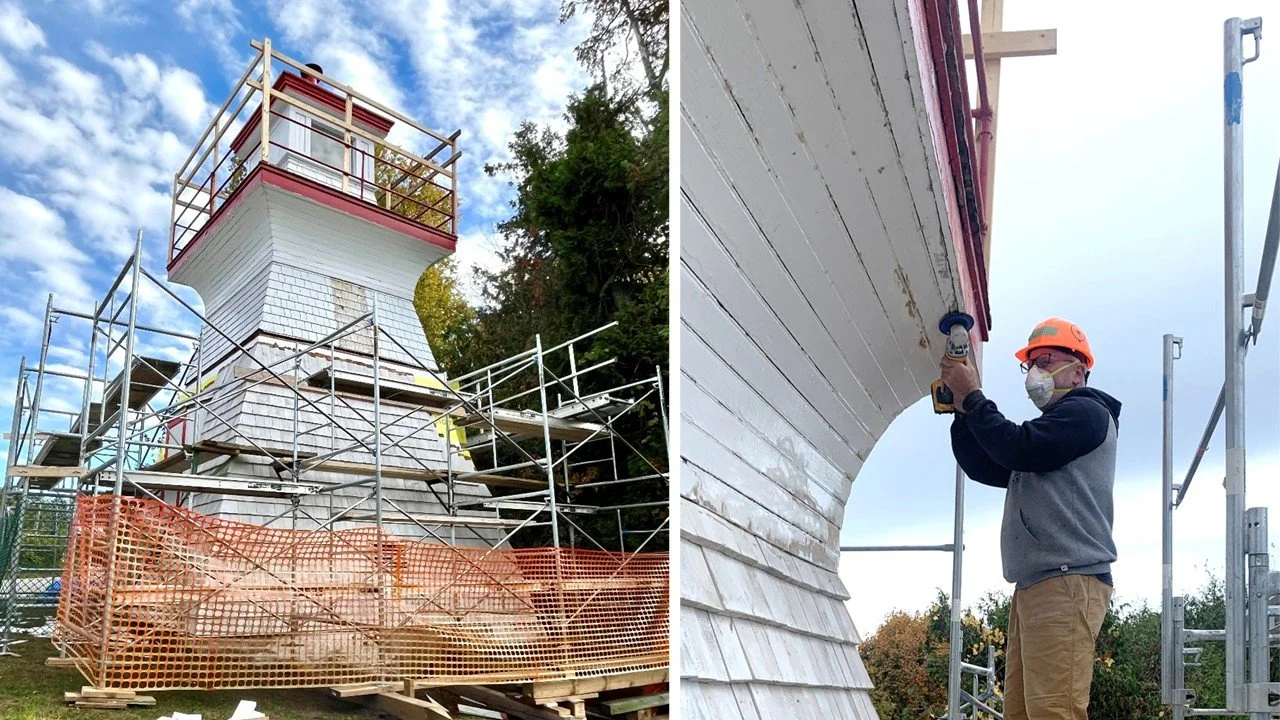
Rear Range Light Restoration
Following the successful restoration of the Front Range Light in 2022, the Marine Heritage Society (MHS) turned its attention to the Rear Range Light. The two structures operate as a paired navigational system, and preserving one without the other would diminish the heritage value of both.
While the Front Range Light had suffered storm damage, the 1903 Rear Range Light presented an even greater challenge. Decades of insect infiltration, rot, and poor ventilation had severely compromised its main structural supports. Restoring the rear beacon required extensive carpentry and careful rebuilding.
Form and Function
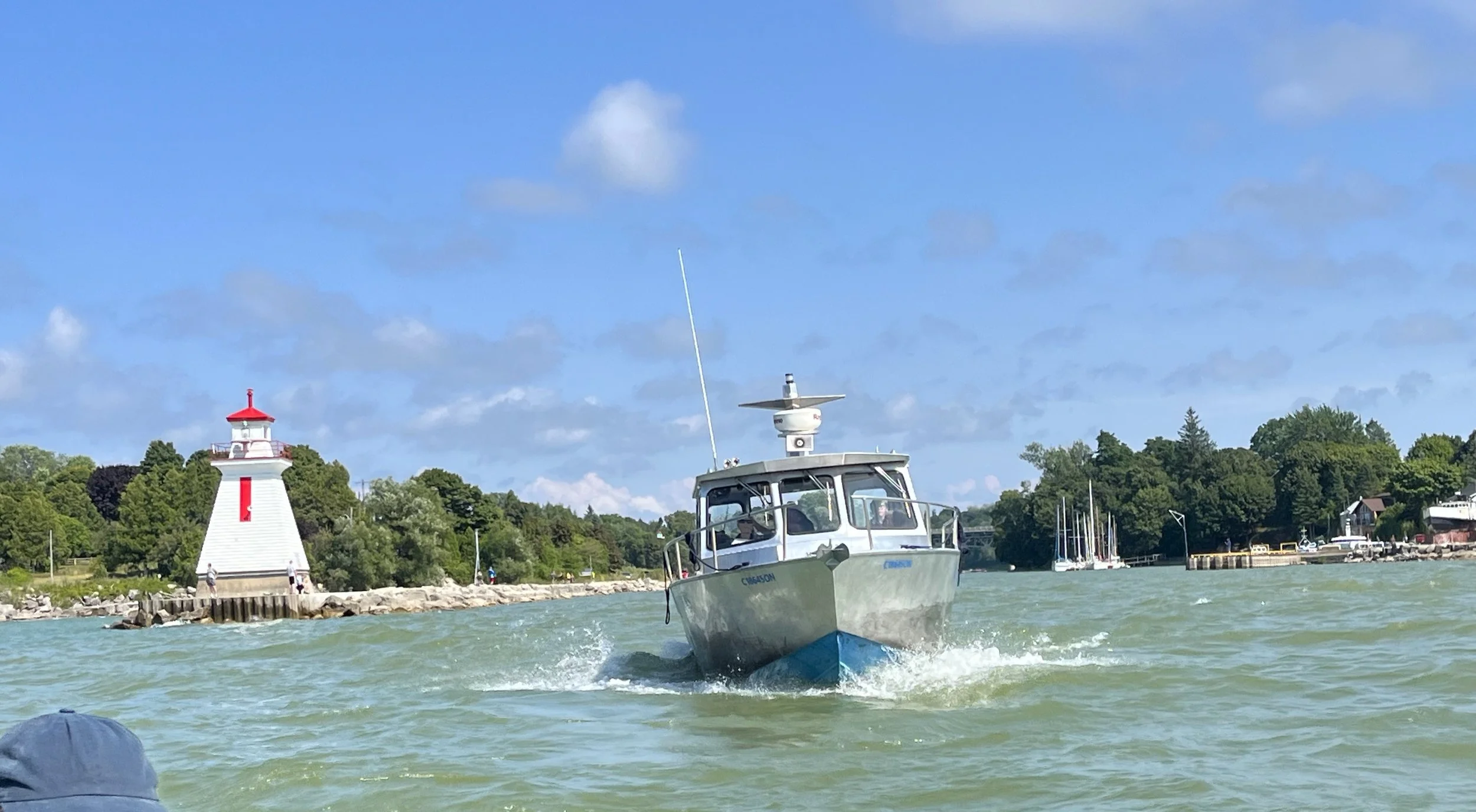
Peerless passing restored front range light.
For MHS members who captain and crew the Peerless II tour boat, it was important that the range lights remain functional navigational aids – not simply static monuments.
Visitors can still observe the traditional practice of optical alignment navigation used by generations of boaters and fishers entering Southampton Harbour. Each of the front and rear beacons carries a light, and when mariners at a distance bring the two lights into alignment one directly above the other – they know they are on a safe passage into the harbour.
Maintaining a working range light system – even in the age of GPS – helps preserve this living maritime tradition and reinforces the waterfront heritage of the oldest port on the Bruce County coast.
Getting Down to Work
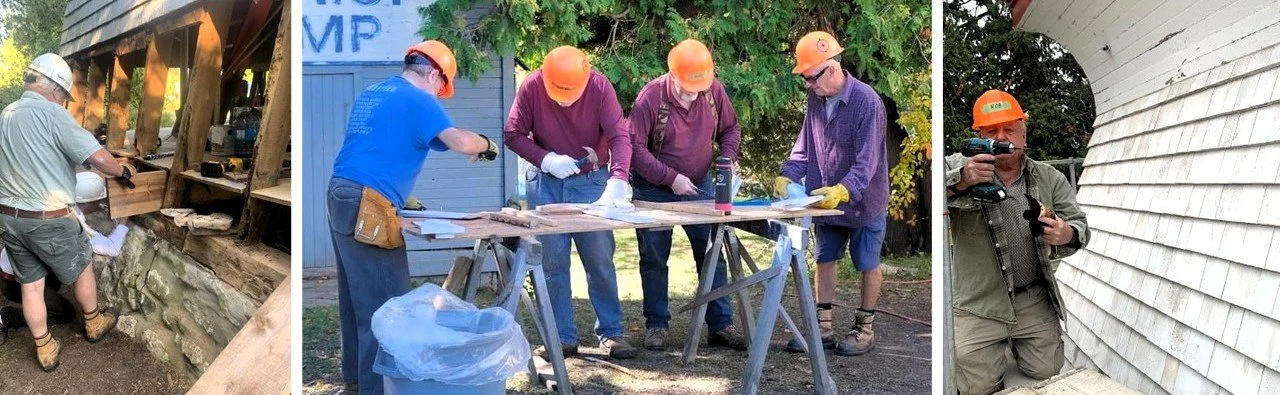
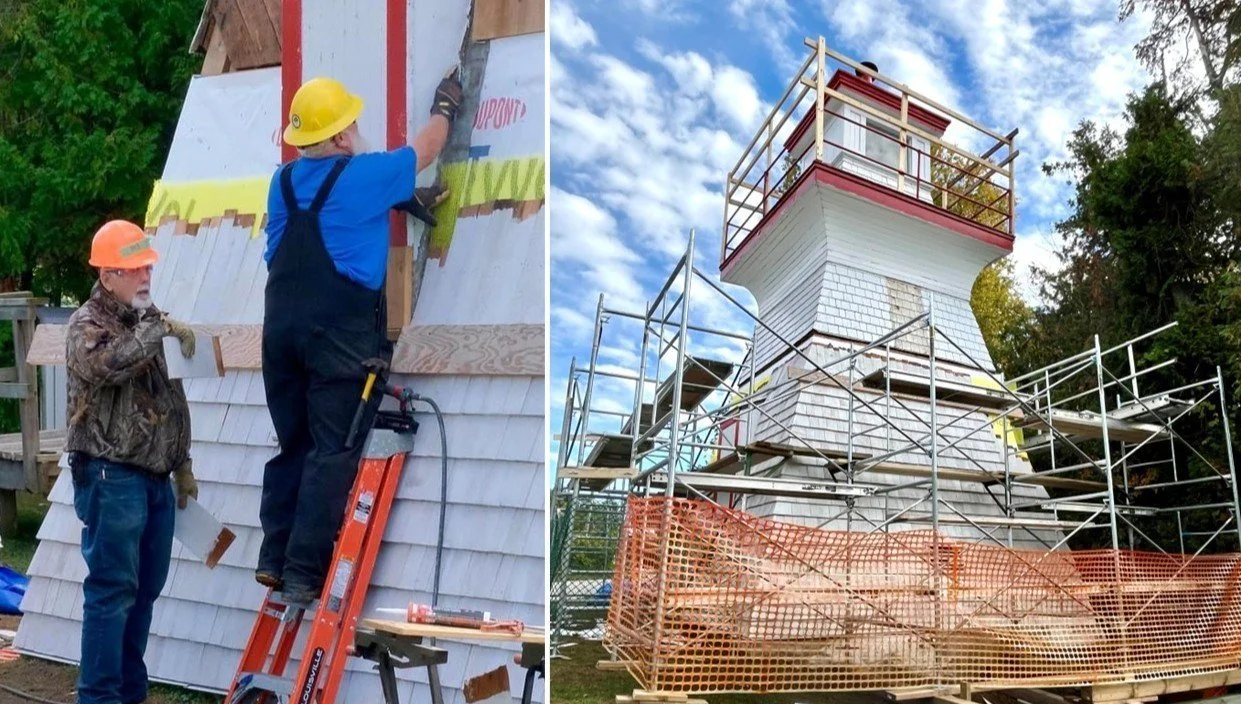
Team at work on Rear Range Light.
In 2024, MHS volunteer Scott Good led the planning and execution of the restoration, working alongside fellow Society members. He directed all technical aspects of the project, identifying extensive wood-boring beetle damage, structural rot, and ventilation issues that had contributed to the beacon’s deterioration.
From this assessment, the full scope of work was defined, including materials, permits, and coordination of two volunteer teams.
Off-site team: Prepared and painted more than 3,500 cedar shingles at The Boathouse
On-site team: Safety-trained carpenters carried out the structural restoration.
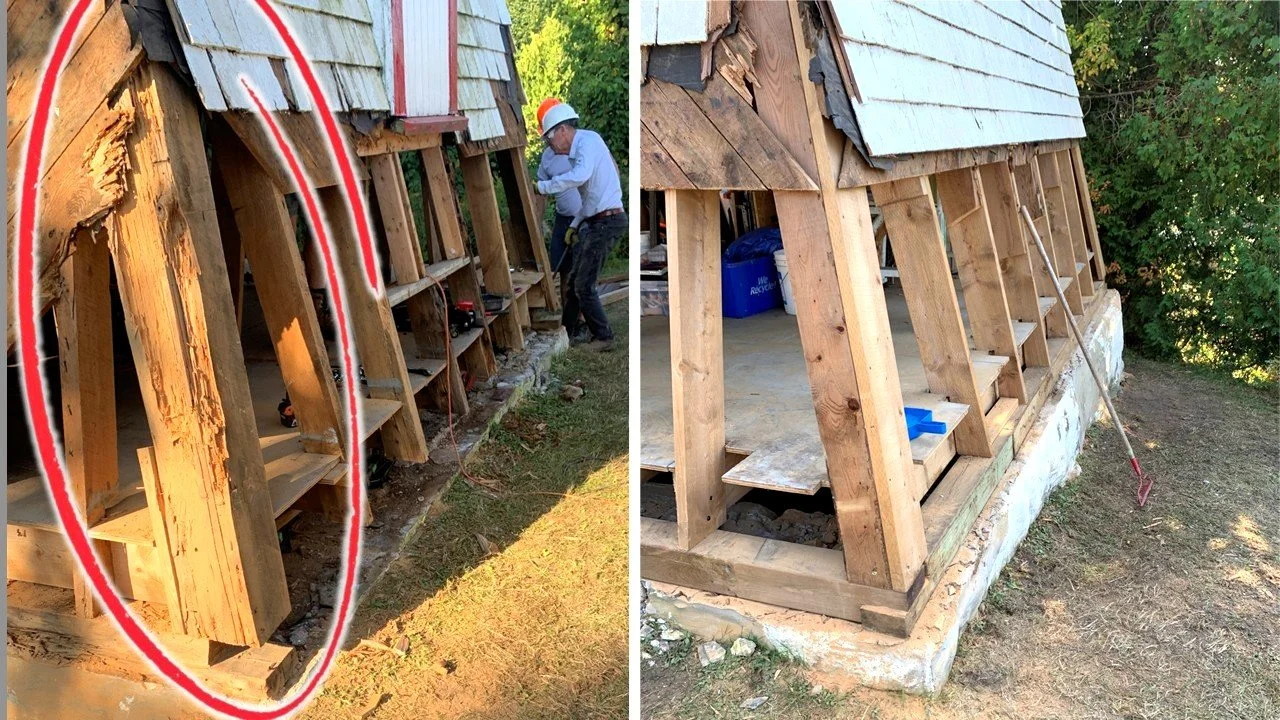
Rotting, beetle-bored wood (left). All key uprights replaced (right).
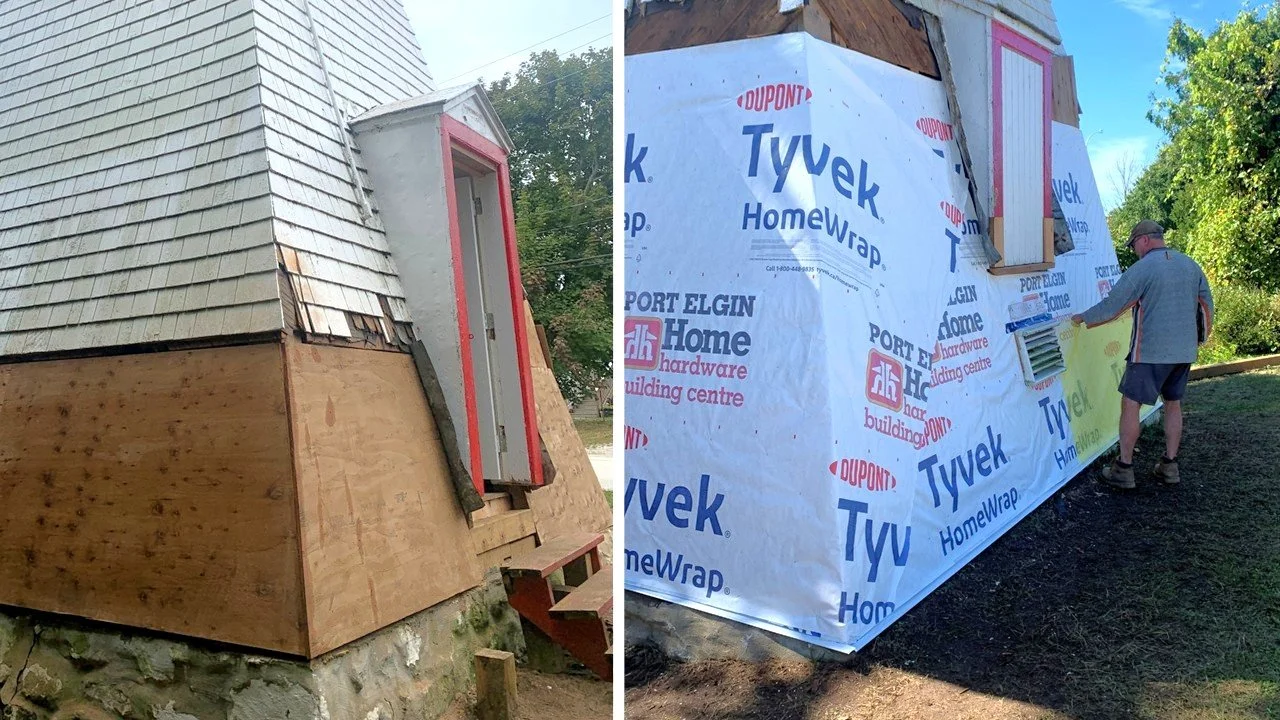
New sheeting all around (left). Building wrap protection and new vents (right).
Over seven weeks, the on-site team rebuilt sections of the foundation, replaced sill plates, upright posts, and structural framing, repaired studs and sheathing, reinforced the upper gallery, installed a new door and window, improved ventilation, and completed painting. In essence, the lower portion of the beacon was rebuilt while maintaining design elements consistent with the Front Range Light
By the Numbers
30+ volunteers contributed across both teams
8 volunteers completed Working-at-Heights certification, building capacity for 2025 repairs to the Boathouse
342 hours preparing shingles plus 860 hours of carpentry, for a total of 1,202 volunteer hours
Recognition and Legacy
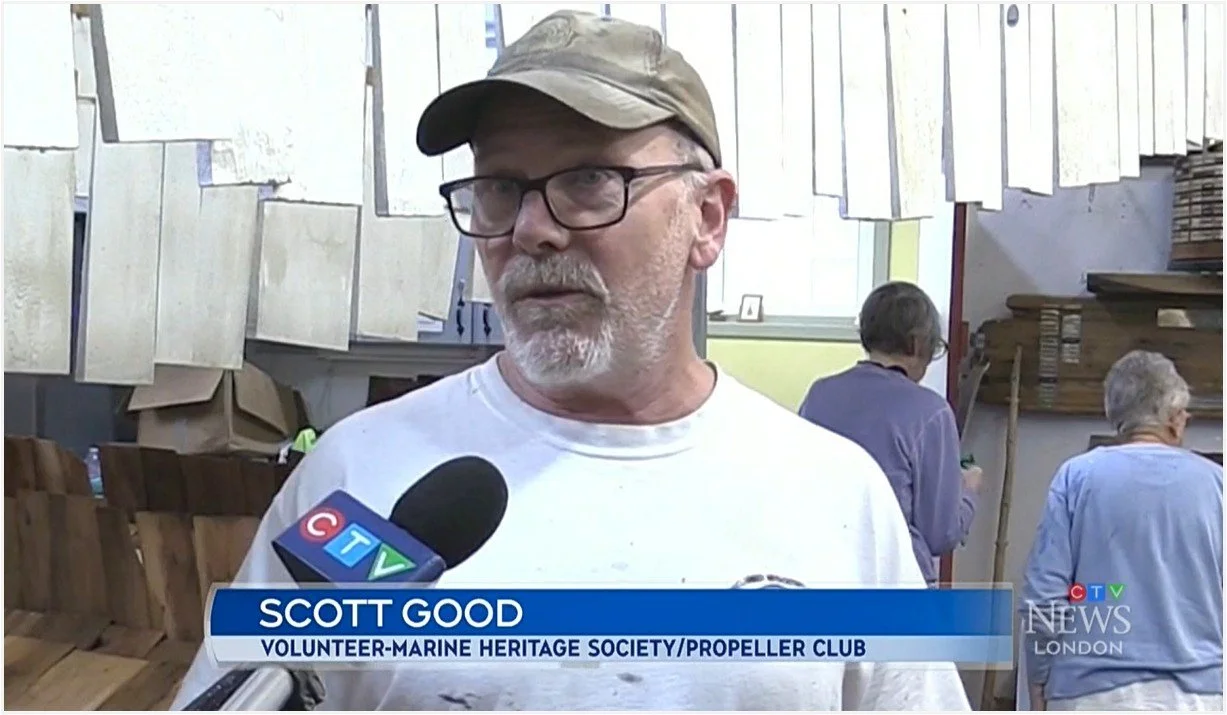
Parts of the project were featured in this CTV News report titled “Volunteers ensure lighthouses get new lease on life.”
During a 2025 Spring inspection by a team from the Canadian Coast Guard – the technical owners of the Range Lights – the quality of the craftsmanship was highly commended.
MHS documented the work to ensure future caretakers understand what was done and why in 2024.
In the summer of 2025, the Rear Range Light was opened to the public for the first time during the Marine Heritage Festival’s Range Lights Open Doors event.
Community Effort
The nonprofit MHS is grateful for the collaboration of the Town of Saugeen Shores and the Canadian Coast Guard, as well as consultation from Truly Nolen and the assistance of local suppliers including Murray McCarrel, Derek Seaman, and Malcolm McCarthur.
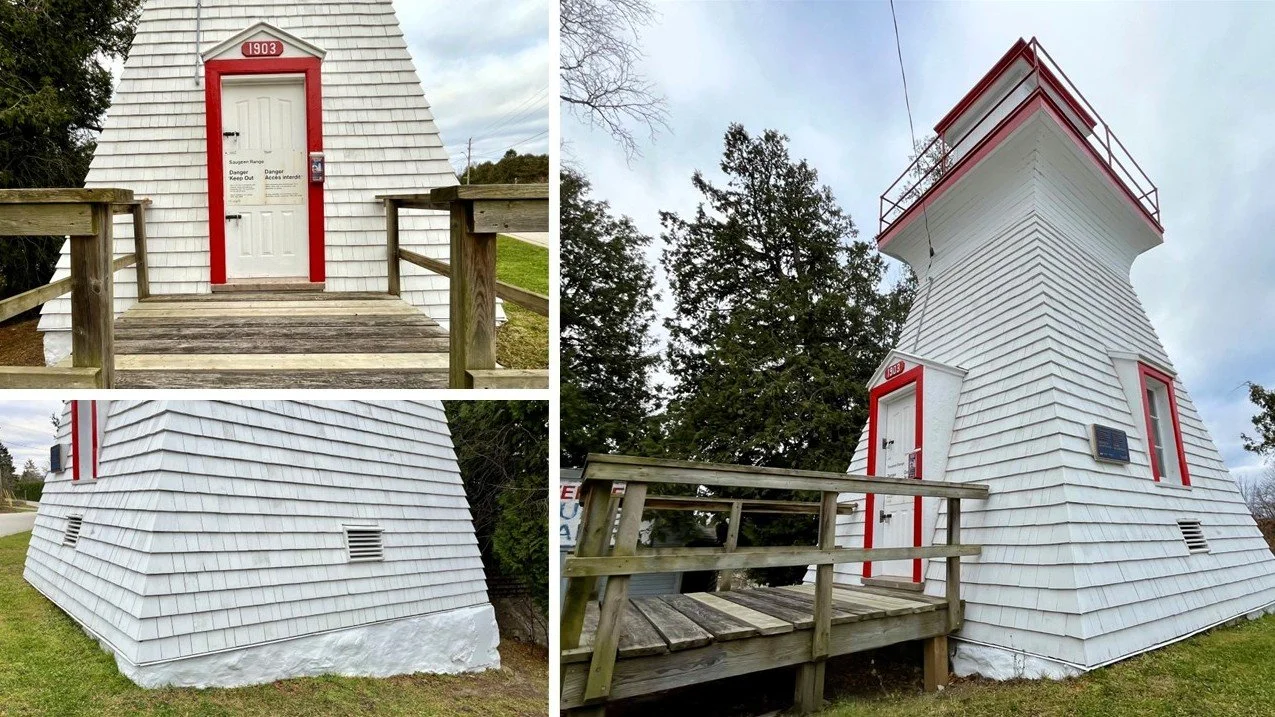
Today, the fully functioning Southampton Harbour Range Lights remain among the most recognizable and frequently photographed heritage landmarks in Saugeen Shores, contributing to the community’s identity and tourism appeal. May they stand, shine, and guide as enduring symbols of the Bruce County coastline for generations to come